Reports

Ramallah Visit, April 2008

Tony Richardson reports from Ramallah:

2/4/08

I had a discussion with members of the FIDA party. I met several members of their new youth organisation, which appears to be growing, and is very active. I also met their Palestine Legislative Council member. He went on to address a memorial meeting of relative and friends of two of their members who were killed on April 1st 2002. This was the date of the Israeli mass invasion of the West Bank and Gaza. 28 people were killed in Ramallah in two days. From his speech at the meeting, it is clear that this party is still in favour of the two state solution. They have no armed section, and are in favour of mass peaceful protests, around the wall etc. The meeting was very moving as it contained both the wives and children of the assassinated people.

3/4/08

Last night the Israelis raided the Al Bireh Municipal offices (This is the other half of Ramallah). Hamas won the Al Bireh Municipal elections. They also raided the Chamber of Commerce, which also has a majority Hamas. They stole as much Municipal material, including hard drives, as they could, trashing a great deal of other things. Yet again showing their attitude to elections. This goes alongside the stealing, a couple of months ago, of all the food at an orphanage for 2000 children in Hebron, because it was run by an Islamic charity. Two weeks ago a Japanese student lost an eye, when he was hit by a "rubber" bullet at the demonstration at Beilin. These villagers won an Israeli High Court decision, that the Wall should be redirected. Yet just as everything else in Palestine the Israelis, in reality, make no concessions. All of this in the "peaceful" West Bank.

5/4/08

Public Sector workers were on strike throughout the West Bank, on Thursday. They are complaining about the three months back pay that they are owed, which is only gradually being paid back. Last Sunday there was a demonstration of Bank and Insurance workers outside the main arab Bank Office. These workers are complaining that they are paid in Jordanian Dinars, and this has dropped in value the same as the dollar, in other words, they have lost nearly 20 per cent of their pay. This is the case for most private sector workers, who are paid in either US dollars, or Jordanian Dinars. Alongside this all these workers are losing out with a rapid rise in inflation. Remember also there is no fallback in terms of social security. The whole situation is one where people spend the whole of their time just trying to earn enough to survive. But still they fight. I looked through the pages of an Arabic Daily Paper Al Ayyam, and all but two of the photographs were of demonstrations, sit downs at settler roads etc. What a cheek of those people that say why don't the Palestinians try peaceful protest. More and more banks seem to be opening here. All Jordanian. It seems most are designed to take money out. Expatriate money has been squeezed ever since 350,000 Palestinians were chucked out of Kuwait, and the Gulf, at the time of the first war.

6/4/08

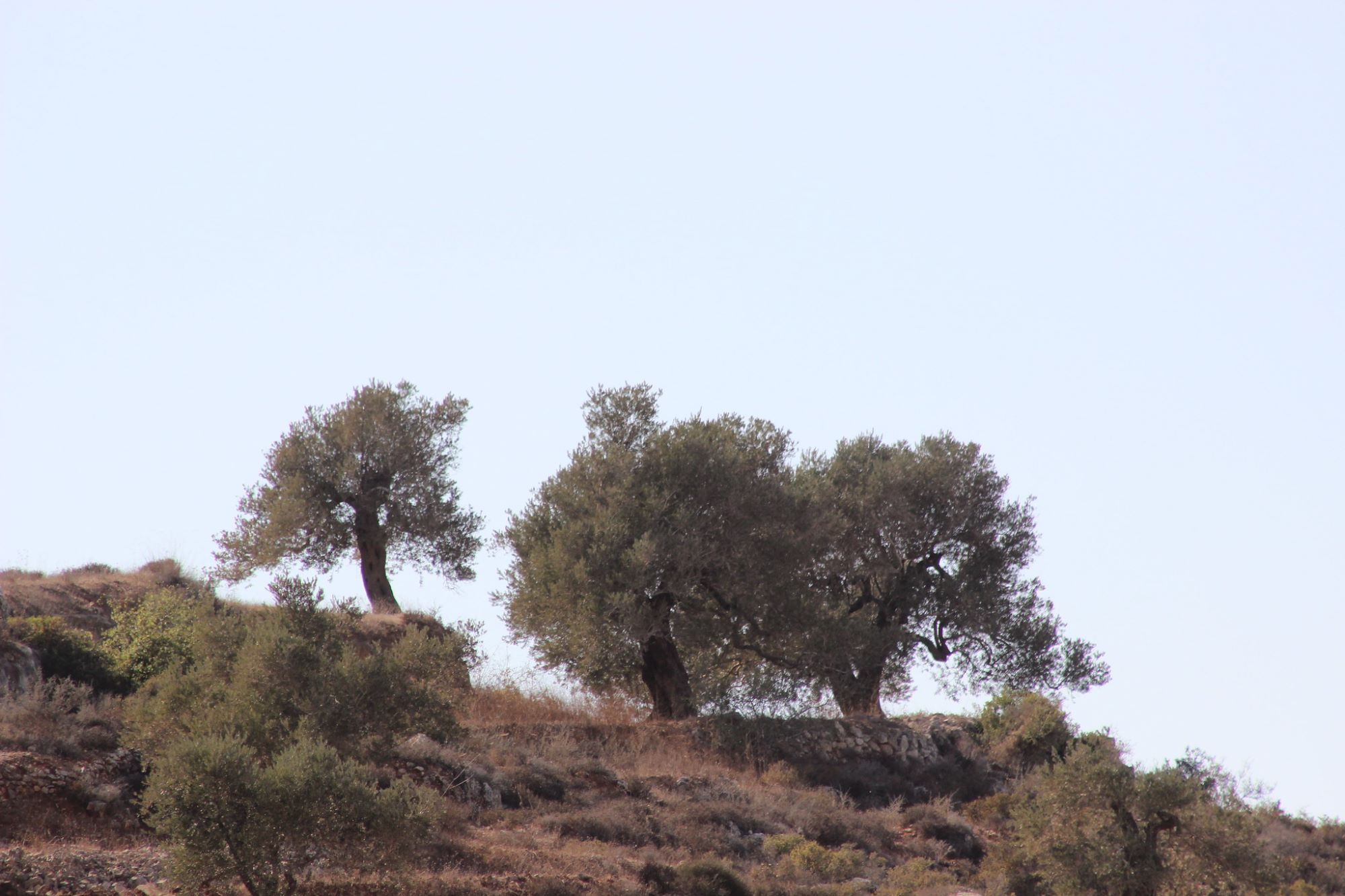
This morning (Sunday) I had an interview with the General Secretary of the El Bireh Municipality. It was in his office, that was raided by the Israelis 3 nights before. The Israelis were there from 12-4.30 in the morning. The door was forced open by drilling the lock. It took 2 days just to clear up the mess, and they still don't know what papers they took. They also took the server for the buildings internal cameras. Considering these offices are only used for municipal services, one would have difficulty understanding the reason for the raid. The only explanation could be that there are 9 Hamas Council members, 4 Fateh and 2 supporters of the PFLP. So the Israelis just want to mess up the functioning of the Council. El Bireh is really part of Ramallah/Elbireh, but is now slightly larger than Ramallah. The Municipality is not allowed to use half of its land, by the Israelis, it has to go to them to get permission to use its own waste dump. It is surrounded by a settlement on one side, a military base on the next (Beit El), then Qualandia checkpoint, and last Ramallah itself. Much of its land was stolen for 'Greater Jerusalem'. It serves 45,00 people, and has 220 workers. Up to now they have relied on the fact that 50% of El Bireh people live in the US, and so they get finance from them. Until the Nakba the population was only 5,000, this immediately became 15,000. The municipalities refuse to take responsibility for the refugee camps, like Al Amari, and Qualandia, which are serviced by the UN But they do help the societies within them. After leaving the municipality I went to Arura village. This is about 25 Kilometres from Ramallah, it had taken my lift an hour and a half, because he had been stopped for 1 hour at Atara Checkpoint. Lucky for me we went straight through. The village is in area where there are no settlements, except one on the edge. This one is new, it started with a mobile phone mask, then houses to protect it, then the whole mountain top, then Palestinians were banned from using the two nearest mountains. So a security barrier for Orange, or is it an excuse? The village has a new clinic, donated by Oman. This clinic has to cover 50,000 villagers in the North Ramallah area, because they have difficulty getting to Ramallah hospitals, because of the Atara checkpoint. The problem is they don't have finance for an X-Ray machine an ambulance or other instruments. The whole area is covered with Olive trees, and on a clear day you can see the Mediteranean. I walked round looking at the ancient houses, the village is more than 1000 years old, and has Olive trees from Roman times. On the way back it came on the radio that tomorrow there was another 1 day strike by municipality workers, this to be followed by further action.

7/4/08

I went to the new office of the Federation of Democratic Trade Unions today. It looks like the strike in the Education, and civil ministeries is complete. This includes all the teachers in the public schools. They are also going on strike tomorrow from 12, and will be demonstrating outside the Legislative Assembly on Wednesday. Meanwhile all the parties in the Assembly, which is boycotted by Hamas, because 40 of their members are in Israeli jails, have declared their support for the strikers. As I earlier reported, the workers are owed backpay, their pay is often late, and it is reduced in value because of inflation. The strike is by a union, that is independent, not part of any federation, but in talks with the independent federation. The Health workers are not on strike because they have not yet completed their negotiations. The strike was provoked by the threat of court action, and docking wages. Prime Minister Fayad has been on TV saying their is no way he will pay the strikers. Yet again these strikes show the criminal activity of international federations who only talk to the PGFTU, which organises nothing, and boycott the independent unions which are constantly on strike. Earlier I spoke to the Deputy Minister of Education, and he argued that money for projects were coming in to Fayads Govt. and therefore it was not time to defeat it. On the street the govt. appears at an all-time low. Mainly because it has nothing controlling it, the assembly can't vote because it is inquorate, without Hamas, and so it is solely a Govt selected by Abbas.

8/4/08

One point I need to make about Al Amari Camp: It is not only run by the UN, but its size is designated by them, it is not allowed to grow, and anybody who leaves can lose their refugee card. This applies to all Palestinian camps, including in the Lebanon.

This morning I set off to visit Hebron, in the South. My start was delayed by the Taxi running in to the back of a young drivers car near Qualandia. This led to forced stoppages, being surrounded by a gang of about 50 youths before we got going again. The journey to Hebron takes about one and a half hours, without interruptions. The driver has to take mostly back 'Palestinian' roads. these can be hair raising. We were lucky we went through checkpoints quite easily. The landscape is stunning, except that throughout the journey you see settlements. When you see Maale Adummin, it is like a science fiction scene, dominating the horizon. All these same buildings, but even in a decent Science Fiction film it is not all new.

As one starts to enter the outskirts of Hebron there is a sign saying that this is a Palestinian Authority Area, and Israelis are not allowed to enter "By Israeli Law". What a joke, they should have added, unless in an armoured vehicle, or a car with an Israeli number plate. I first had a discussion with a Palestinian Activist about Hebron. Its population is 200,000, add in the surrounding villages, and this becomes 750,000. It was always the commercial and industrial city of Palestine. But now this has been changed, at least 100 shoe factories have closed, and this goes for clothing, and other industries. All caused by the Israelis activities. The City is divided into two. There are the Palestinians, and the 400 Jewish Settlers. The settlers have 5,000 soldiers defending them. There were no Jewish people in 1967, but in 1969 they started to move in. They gradually stole Palestinian homes, and created a settlement within the city. The soldiers then closed down sections of the old city markets, and closed whole streets. They set up checkpoints, and divided off 60,000 of the Palestinians from the rest of the city, with the settlers in between. So these people now have difficulty going to hospital, getting to work, and often the Israelis close off the water and electricity.

The Israelis have also closed schools (one of which I saw), they have recently been attacking Hamas schools, orphanages etc. They keep making raids, arresting people and making life hard, closing shops and stopping normal activity. Often people have to get out using the roof tops. But the people are the same as in Ramallah. There are 15,000 students here, and many of the young people go to colleges outside. The Council has 9 Hamas members, and 3 Fateh. The teachers were also on strike Monday. Resistance goes on. I visited a womens' self-help group for women, making baby mattresses, and sewing. I then toured the Old City. The sight is unbelievable: sections are completely blocked off, there are checkpoints and metal detectors everywhere, and where the settlers have stolen the houses above shops, they have enlarged them. They throw stones out of the windows so the Palestinians have to put up netting, which doesn't help against liquids. Everywhere there are Israeli Army outposts protecting the attackers. One whole area has completely deserted streets, with only an occasional settler car. The Ibrahimi Mosque, the third most important Islamic site in Palestine, is controlled by soldiers. To go in I had to pass several checkpoints. It is often closed to Palestinians. The settlers are established in the grounds, and have stolen a huge building adjacent to the entrance. Of course the problem isn't just the 400 settlers within. The Israelis have allowed only two real exits to the City, and control all imports and exports. They have a stranglehold, and are expanding their settlement activity. I have pictures of all these things, and it needs to be seen to be believed.

Everybody I spoke to demanded that British people act, because they feel our Government's responsibility.

9/4/08

I went in the morning to the demonstration of Ministry workers. This includes teachers, in an independent union. It was quite difficult to get to the demonstration, which was meant to be outside the Legislative Council Building. Police were everywhere, stopping people getting to the assembly point. Some soldiers from Abu Mazens' special force had been brought in from Jericho.

We got to where the strikers were in a roundabout way. As I said before their complaint is about the high cost of living, and the slow payment of back pay. The strength of feeling has been added to by the fact that Stooge Prime Minister Salim Fayed has taken the strikers to the High Court, arguing that they are affecting students. The High Court was supposed to decide today if the strike is illegal. This has made the strike much more important. All over the world people are feeling the effects of what the UN has said has been a 50% rise in the price of basics in one year. They have said that the food riots in Egypt, and strikes in Jordan will be followed by others. They are clearly right, and the US policy of stopping Govts subsidising basics, as has happened in Iraq will strengthen this. If the Palestinian authorities outlaw strikes, as in Egypt how will workers fight back? Anyway the demonstration showed the almost total opposition to the Abu Mazen appointed Government.

All the four blocs in the Legislative Assembly had their main members speak in support of the workers. This includes Fateh, and Mustapha Barghoutis' group. Only Hamas was excluded because their members boycott the Assembly, or are in prison. Workers spoke from the Independent Unions, and womens organisations. There were about 1000 workers in attendance. Caroline Johnson from the teachers union in Birmingham spoke in their support, saying she was on strike for 2 days when she got back, and I spoke saying that the right to strike was a vital democratic right. (First an elected govt is not accepted, then they move on the right to strike, next the right to speak? All in this 'fight for democracy'.) The workers vowed the strkes would go on. (pictures to follow).

In the afternoon I went to a meeting of the members of the independent bank union in the Arab Bank. This was the members in Ramallah, there were about 100. The bank union has about a 60/70% membership in the West Bank. The workers recieved a report of the negotiations with the bank, which is based in Jordan. The bank will only negotiate across all its branches, and the drop in the value of the Jordanian Dinar does not effect them in Jordan in the same way. The workers in Palestine are also paid in Dinars but the shops sell in Shekels, so they have lost 20% of their wages. The bank has offered a 6.5% rise, and pay 16 months pay, but this does not make up for inflation. They had a succesful 2hr strike on the 30th March, that is after the banks close to the public, and they do their paperwork. They agreed they would do the same again. The existence of these active independent unions in Palestine is of historical importance, and yet the trade union movement in the UK, France etc. has nothing to do with them, they will only relate to the PGFTU, the 'official' union, which was not present today, and takes no action.

11/4/08

I went this morning to Bei'Lin, the village near Ramallah, where there are weekly demonstrations against the Wall. Even though the villagers won, in the Israeli High Court, a decision that the Wall should be redirected, ie. not take quite so much of their land, everything goes on more or less as before. The court decision was not dated. So not only has a huge settlement been built on their land, but only a small number of villagers, on occasion, visit another large part of the land, by going through a gate in the Wall. I came on this demonstration last year, the settlement is bigger, and the demonstration, and wall, are in exactly the same place. The only difference this time was that the Israelis fired from the other side of the Wall. It must be said that the Wall, the army, and the protest demonstration are all on village land.

A notable thing about this demonstration, is that it brings together the Palestinians, who are at the front, Jewish demonstrators from Israel, and internationals. Today there were about 100. We marched from the Mosque, in the village, to the Wall/Fence. Palestinians stood on the fence, shouting and waving flags. One pulled open the first stage of the Gate, and this started the Israelis firing. It was a mixture of tear gas and rubber bullets. The rubber bullets started mainly when the young Palestinians started throwng stones with slingshots. Needless to say these are ineffective, but the rubber bullets aren't. An Israeli journalist received a hole in his leg, and was taken off to hospital.

Here in Bei'Lin you see it all, a settlement that contains the biggest concentration of Orthodox jews in the world, built on stolen land, and dominating all activities of the local people, together with the Wall that is a means of enforcing this domination, and to steal more land. Alongside this is the Israeli Army, the enforcers, and they have their special roads all along the Wall. Today, in the West Bank there were two demonstrations against Settler roads.

Conference: A Single State in Palestine/Israel, November 2007

Tony Richardson attended this conference, held on the 17/18th November 2007 in SOAS. Here is his full report.

Palestine Visit, July 2007

Tony Richardson reports again from Palestine:

18/7/07

The man who sat next to me on the shared taxi, from Jerusalem to Ramallah, works for Jerusalem City Council. He is a tax assessor. Jerusalem's city limits, as defined by the Israelis extends past the Qualandia checkpoint, so Palestinians, who are covered by the Palestinian authority, pay their council taxes to the Israelis, and get nothing in return, even their water comes from Ramallah,(which is true of the 'Israeli' side of the checkpoint), and the roads are never repaired.

The tax assessor showed me the aerial photographs, taken by the Israelis, which show any changes, in the buildings. He then goes and checks the actual number of rooms, size etc., and it is on this basis that the people get their bills, which they invariably pay. For good measure he complained about his humiliating treatment, by the Israelis, on his way back through the checkpoint, and he showed me the photograph, in his camera, of his house in Jerusalem that the Israelis demolished, because of his lack of building permission. He questioned whether there would ever be peace, and wished the Palestinians would organise a tax strike.

I meet up with my friend, a Fateh supporter, who gives me an assessment of the political situation. Only a small number of Al Aqsa fighters, in Ramallah, have sold their guns for 2000 Jordanian Dinars, which is fatehs system of disarmament. "What a humiliation for a fighter to sell their guns". None of the PFLP, DFLP or Hamas fighters have done so. The Al Aqsa people are then able to serve in the police, unarmed for 3 months, and then get guns again but under PA control. This way Abbas is putting Fateh even more in control. There are armed police all over the streets of Ramallah, enforcing the new 'no street parking' rules. About all they are good for! This is the decision of the new police chief, the 6th in 3 years.

My friend's assessment of Gaza is that Fateh collapsed so easily because of Dahlen, and his Death Squad enforcers, who weren't just used against Hamas. There are so many different groups in Fateh, following individuals, that they have no unity. He assesses that Hamas, who are organised, could take Ramallah in 3 minutes. The people are hostile to Abbas's collaboration with the Israelis. Fateh people also have the fear that any attack on Hamas in the West Bank could be reciprocated by attacks on Fateh people in Gaza. According to him Dahlen is getting out to Jordan, at Abbas's request, and his death squad is being sent from Ramallah to Egypt. In the meantime, in order to avoid provocation, Hamas has ordered its people not to organise any public activities. Mustafa Barghouti is also staying on the sidelines in order not to legitimise, or be connected to, either group.

With regard the children that the Oxford Ramallah Friendship Association is bringing over tomorrow: The Israelis have instituted new rules, as has the UK. For the UK everybody has to be fingerprited, and their eye print taken. For the Israelis they will not accept passports that have been issued since May, on this basis the children going from Abu Dis to the UK were stopped two days ago. People now have to do what they had to do before Oslo, and get a special security form signed by the Israeli security. So it is not only in Gaza that the border control by Israel has tightened. The forms for our kids were got this morning, from Beit El, and the Abu Dis kids are trying again, at Allenby, also this morning.

20/7/07

A woman working with the "Israeli Committee Aganst House Demolitions" last night showed me pictures of the house they were rebuilding in Anata near Jerusalem. While they were working the Israelis came up and knocked down another house, about 100 yards away, it took one and a half hours. They knock on the door and nobody in, so they pick the lock, throw out the furniture, drill to weaken the walls, then bulldoze it down. The ICADH workers had the basic structure back in 24 hours. A rich Jewish New Yorker has given them enough to rebuild 40 houses.

Today I went to the weekly demonstration at the wall at Bil'in. This is the focus of the local people, the internationals, and Jewish organisations from Israel. The Wall/Fence has been built here for a while, but the Israelis on the Palestinian side are still determined to stop protest. The wall has cut off large amounts of the village land, and it is scheduled for industrial building, as well as the expansion of the huge orthodox settlement on the Israeli side. We gather at the mosque, as the worshippers come out from prayers. We march down to the olive fields next to the wall. The young men and the Israelis are already there, the latter in big numbers.

As soon as we are in firing range the tear gas shells come over, kerchiefs and onions still can't stop the tears streaming, followed by the sick feeling. We scatter and regroup in the groves, more tear gas, some fires start and burn the trees and shrubs, we try to beat the fires out using olive branches. More tear gas shells, the wind turns towards us, the fire fumes as well as tear gas envelope us. Soon comes the shout for an ambulance, as a Palestinian is carried past us with a serious wound to the head, some say caused by a live bullet, others by a "rubber" covered metal bullet. In any case he is covered in blood as are the people carrying him.

We fall back to regroup, and go forward again, only to be driven back by more tear gas and rubber bullets coming from all angles. In the course of continuous toing and froing I see at least three more body injuries, caused by rubber bullets. Still the young men throw stones at the soldiers, and still the demonstrators go back. This goes on for nearly two hours, and believe me that amount of tear gas is painful, let alone the rubber bullets. There is an online Bil'in petition, as well as weekly demonstrations. The wall story will not go away.

26/7/07

Some discussions:

Woman from Al Amari camp ex Gaza, with family there: Re education, she makes the point that children are educated to the 9th year in the camp, then go in to Ramallah schools. Suddenly they are with richer students, and nothing is done to stop antagonism between the two groups. This follows in to the universities, so you don't just have inter-party conflict, but also city-camps conflict. Re Gaza, this is her and her family there's take on it: When Fateh moved back, under Yasser Arafat they set up prisons and did the same to their opponents as the Israelis had done in their prisons, so many Hamas people were tortured in the prisons, including the person who was elected the Minister of the Interior. Also during this time jobs nearly all went to Fateh people, The torture etc. only stopped when it was exposed by civil rights groups. When Hamas took over the Fateh people in the offices refused to help them. Then there was Dahlen, who any child in the street could tell was corrupt, and violent, and pro US. They collapsed because they were corrupt and loyal only to their individual leaders.

In a conversation with a Fateh member, to counter this, Hamas knew these things when they went to Saudi Arabia and set up the unity government. So Hamas still had grounds, but took a decision to move. I was also informed that although Marwan Barghouti called for the removal of Dahlen, who definitely has been sent away, he was on the same Fateh "Forward" list as him less than 2 years ago.

In discussion with a PLO Executive member he told me that the recent conference in Ramallah had sent the message to Hamas that they could go in to the called for PLO elections, only if they gave up their positions in Gaza.

In visit to Bir Zeit University I find that the person who was executed by the Israelis in the street in Ramallah outside the Nazareth Restaurant (reported on the Oxford Ramallah website) was a student there. I also find that there are now no students from Gaza, even though they offer courses not available in Gaza, because the Israelis will not let anybody out of student age.

Trade Union Conference tomorrow. I have learnt that the Government of Egypt has closed down the Offices of the Democratic Unions in that country, who were following the Palestinians lead.

28/7/07

Friday and Saturday 27/28 July 2007 saw a conference in Ramallah where the new 50,000 member Coalition of Democratic and Independent Trade Unions was formed. Mainly in the last 4/5 years, workers in Palestine have been forming independent and democratic unions, usually at first by forming workers councils in individual workplaces, and then by uniting these councils to form sector unions. They have often done this, with the assistance of the Democracy and Workers Rights Centre (DWRC). These unions have been meeting with some older democratic unions, and have now come together to form a coalition of such unions. They represent workers in finance, health, pharmaceuticals, higher education, kindergarten, telecommunications, municipalities, electricity, and the unemployed. More...

A Mother of Seven Prisoners

Report from Hekmat Bessiso, director of the Respond to Conflict project in the Al Amary Refugee Camp, Ramallah. Received 20/7/07.

Latifah Naji Abo Homeed, 61 years old, lives in Al Amary Refugee Camp in the city of Ramallah in Palestine. Of her 10 children, one was killed in 1994 by Israeli military & seven have been imprisoned by Israel. She longs to see them but has only their photos for comfort. She has asked to be taken to prison herself so that she can live with them.

Latifah remembers how her son Nasr loved to play with his first son; his wife delivered his second child while he was in prison. She misses Basil's jokes, Naseir's kindness, and Muhamed's helpfulness. Her youngest, Jehad, was always missing his older brothers, and now he, too, is a prisoner, awaiting his own conviction. Sharif is engaged and dreams to be free and marry his bride. Islam was known for his beautiful eyes; many girls tried to win his attention by being nice to Latifah. Latifah does not attend any weddings because she is afraid she will not be able to control her tears. She despairs that she will die before she can witness her own sons' weddings.

Though Latifah has not given up hope that her sons and other Palestinian prisoners will be freed, she often feels that no one remembers them and no one is fighting for them. She prays, searching for the strength and patience to endure life under Occupation and the unending separation from her sons. The home Latifah shares with her husband has been demolished twice in the last ten years. She and her husband, 67 years old, have recently opened a small candy store in their home to try to earn money and fill their free time.

This is the story of countless Palestinian women, who hope for the freedom of their sons, husbands, and brothers with every breath.

Palestine Visit, April 2007

Tony Richardson and three other ORFA members visited Palestine in April 2007. Tony's emails which follow point to the daily hardship of life in the region:

2/4/07: Ramallah

Back in to Ramallah from Jerusalem. Today we go to the demonstration in Al Manara Sq, about Alan Johnson. All the local media is there, as well as a lot of international reporters. They have agreed a three day strike, and will only report about the Alan Johnson story. Speeches are made, condemning the kidnapping, and most people hold the position that it is a blow to the Palestinian cause, if journalists are attacked. Up to now it has been the Israelis who have injured journalists, and we hear of one, who has just come out of hospital after 3 months, who was shot by the Israelis in Ramallah. We learn, at this point that we have just missed a demonstration, at the ministry, of striking health workers. They are demanding unpaid wages. I then go to the local branch of the Palestinian General Federation of Trade Unions, they of course describe the horrible problems of workers, with the high levels of unemployment, and still problems of getting to work through road blocks. Also the problem of the wall stopping particularly agricultural workers. The Oxford Ramallah Friendship delegation then go down to Al Amari Refugee Camp, in Ramallah, to help pick the eight children, who we are bringing over in July. The choosing is hard, because there are a lot who fit in to our criteria, of poverty, hard family circumstances, through martyrdom, or imprisonment, and doing well at school. With the help of the women's centre, and our friends it is done. We then head back in to Ramallah. Here we attend a meeting of our supporters in Ramallah. It turns in to something different, in that leading members of several of the new unions have been invited. I will produce a full report of this later, but it is a historic development. Many of these bodies were in embryo on my first visit 4 years ago, and they are now going to form their national federation in July. They are working in the most difficult conditions, and are carrying out various actions, one described hunger strikes, speeding up production when there is shortage of materials. The hospitals have had long strikes, and forced negotiations with ministers. The newest formation is of unemployed workers, they pay 15 shekels (£2) to join, and they organise conferences, demonstrations, as well as help with healthcare etc. This is the first unemployed union in the middle East, although one is now being started in Egypt. These are the poorest workers, and the Palestinian authority tried to block their formation arguing it was against the existing Jordanian laws. They were told that unlike other unions they did not represent a sector. But after a large conference, attended by a minister they forced recognition, and could now open a bank account. They already have 10s of thousands of members, and are looking for support from trade unionists in Europe. We finalised our meeting with preparation for Thursday's twinning conference in Ramallah, and finally went to eat.

3/4/07: Nablus

This is a different kettle of fish. We get a bus from Ramallah, not too much of a problem, getting to Hawara checkpoint, at the entrance to Nablus. This is also quite easy to cross, but the first sign of how desperate things are is the fact that taxi drivers seem to want to fight over our custom. So we decide to walk. We pass Balata refugee camp, where that morning a leading militant had been seriously wounded in an Israeli raid. When we get in to town we walk in to the old city, there are no Europeans whatsoever, we go down a backstreet, where we are confronted by a gunman, a bit scary, but he lets us pass. We decide to stay in the main streets, and after a coffee, and then a meal we arrange to meet a political activist. We go to the wrong building, and whilst on the street are greeted by four young fighters, who shake our hands, but are obviously checking us out. A guide on the street explains that they are wanted by the Israelis, and that this is a city under siege. When we go to meet our contact we notice that as well as the fighters there are many different sections of the armed Palestinian forces. At the Fide offices our contact explains that conditions are particularly bad for any kind of business, there is 70 per cent unemployment, because people with money have got out, to other cities, or countries, this explains the huge amount of building in Ramallah. This also shows that the Israelis don't just want three Bantustans, but they want some worse off than others. 4000 of the 11000 Palestinian prisoners in Israeli jails are from Nablus. There are daily raids, and not even the Arab press reports all the incidents. Most of the media is in Ramallah, this is why the Israelis don't want anybody going in to Nablus, so they can do what they want. We decide to head back to Ramallah. The checkpoint is easy for us because women and foreigners go out of a separate exit. I don't like doing this, but we need to stay together.

4/4/07: Ramallah and Al Amari Camp

Easier day today. Wonderful lunch with Janet Michael, the Mayor of Ramallah the first Woman Mayor of a major city on the West Bank (are there many in the Middle East?). She describes their problems, and like all the people we meet stresses the need to lift the European sanctions. It is interesting that the Hamas councillors voted for her to be Mayor, against the Fateh candidate, she stood as an independent. We then head off to the Al Amari camp again, to see the parents of the children, to confirm that they are happy with our plans. They explain that after the last group of kids came everybody wants to come, and they trust us, in fact they say why not bring the mothers. It looks clear that we have managed to steer clear of any particularly group, in relation to the picking, and therefore have developed this trust. Back to Ramallah, for a Mozart Concert in the Boys School, and performances by the London Choir with the Jerusalem Choir. A far cry from the streets of Nablus.

5/4/07: Twinning Conference in Ramallah

We often use the term twinning, but the conference is clearly about linking, people to people. There are over 30 delegates from the UK, plus a touring football team. There are about 70 from Palestine. This is the fourth such conference, and it has clearly taken off. The only person stopped by the Israelis at Tel Aviv, was held for three days, she was a Moslem woman. Janet Michael opened the Conference, and there were speeches from a political unity organisation, and from an NGO. The first workshop was on the Wall, which though good meant that the conference took a while to get going. But once the practical workshops started it was clear that there was a great enthusiasm for this kind of work. In the report back discussion there was some debate as to whether one includes all political parties, or concentrates on the left. A final statement was made, and contacts exchanged. There will be a full report on www.twinningwithpalestine.net .

Good Friday 6/4/07: East Jerusalem

Got taxi from Ramallah hotel to city centre. Main road was blocked off by the preparations for a huge Hamas demonstration, and rally. Walked to bus station. We then got bus to Jerusalem. At the Qualandia checkpoint all the Palestinians have to get off, and go through luggage check, as we have a lot of luggage we decide to stay on board this time. The guards come on the bus to check international passports. Five elderly religious black South Africans, two of them nuns, don't have stamps on their passports, because they came from Saudi Arabia and there is a policy of not stamping these. So after going through several different levels of 18 year old guards, who cannot understand why nuns would wish to go to Jerusalem on Good Friday, they are made to get off and join the Palestinian checking procedure. So when we got through the Palestinians were waiting for the bus, and we never did connect with the S.Africans again. They must have felt they were in a time warp. The result of this was an hours delay. As we got close to the Old City in Jerusalem we were stopped again, and rechecked. Another delay as the soldiers phoned through about some of the identity cards. This is meant to be a half hour journey, but without any real incident it took over three times that.

7/4/07: Ramallah

Meet unemployed workers in the morning, they need computers, and any other help. Any ideas would be welcome. It is possible to bring over second hand laptops. The unemployed get no social security, just sometimes maybe a thousand from each region get 100 dollars a month for 3 months, and then a different thousand. The state used to give a couple of thousand social work for a month, again for three months, but this policy has stopped, and they are trying to get it reinstated. we then went to the Easter religious march through town. This is led by huge Scout Marching Bands, including muslim troops. At the front of one of the bands are pictures of martyrs, who were in the band. All are highly nationay, led by Palestinian flags. (These were the only kind of processions the british used to allow). Then came all the religious dignitaries, on their way to receive the flame from Jerusalem. Now head off to camp for final meeting with the kids, and photo shoot.

Ramallah Visit, June 2003

This diary paints a vivid picture of Tony Richardson's visit to Ramallah in June 2003.