News

Ramallah Newsletter, 30 May 2007

From an ORFA contact in Ramallah

It was a good day today, well, that is until about 5:40pm when Israeli undercover and military forces assassinated a Palestinian outside the window where I was standing. The target was Omar Abu Daher, a 22-year-old who it seems happens to be a member of a security force loyal to Palestinian Authority President Mahmoud Abbas. He was only one of several that were murdered in cold blood today; two more were killed in Gaza, one in Tulkarem, two others in Jenin. These are the ones reported so far, but the night is still young.

Unknowingly, I, along with a dozen Palestinian and foreign colleagues, happened to be in the same building where it seems Omar was having dinner. Omar was sitting in the popular street-front Nazareth Restaurant (catty-corner from Angelo's Pizzeria), well known for its falafel and where my wife stopped this morning to bring some falafel home for breakfast after she dove our younger daughter Nadine to school this morning. The restaurant is walking distance from the elementary school's entrance. As a matter of fact, only a few hours before this assassination, between 1:30pm and 1:45pm to be exact, my daughters and I passed this same spot after picking up Nadine from school. Our other daughter Areen was home all day studying for her end of year exams and wanted to take a break so she went with me for the drive. I dropped Areen off in front of Nazareth Restaurant so she could buy the three of us ice cream cones from Baladna Ice Cream Shop to eat on the way home. Baladna is a few doors up from Nazareth Restaurant.

Later in the afternoon, while Omar, the latest Israeli victim, was having a meal at Nazareth Restaurant, I was on the third floor, in a roundtable discussion, one in a series that I'm attending at the Mattin Group, a human rights-based policy research and advocacy organization. We were meeting to learn about the workings of the European Union and how we can make it more accountable to International Humanitarian Law. The irony between what was about to happen on the ground floor and what was being discussed on the third floor is mind-boggling and sobering, to say the least.

An hour and a half into our meeting in the conference room, the window of which overlooks the main Ramallah thoroughfare, we heard car tires screech and a loud bang. My knee-jerk comment was that a car accident had happened. One of my colleagues bent back to take a look and before he could speak rapid machine gun fire and loud explosions erupted. The gunfire was literally below our window. We all immediately took to the floor and crawled to a safe hallway in the middle of the office.

A peek out to the street and it was confirmed, as it has been so many times prior, the Israeli military had entered the middle of town again. A few more peeks and the picture become clearer. An undercover Israeli military hit team entered under the cover of an armored jeep, camouflaged to look like a Palestinian delivery truck, with Palestinian license plates and the whole works. A few meters away was a blue civilian mid-sized car with more undercover hit men; this group also had a masked man with them, most likely a Palestinian collaborator who was used to identify the hit team's target. This assumed collaborator could have also been an Israeli fake to make Palestinian onlookers feel like they are being betrayed more so than they really are -- we will never know. A few minutes later and an Israeli armored jeep showed up clearly exposing the unraveling events below. Then a Palestinian mini-van taxi with more Israeli plainclothes military personnel appeared, now wearing only baseball caps that identified them as "POLICE."

For the most part, we stayed in the center of the office, away from the windows. Most people with me had been through this type of activity before and took it in stride, thinking that another arrest operation was taking place. Two young foreign women that were with us seemed to be experiencing this for the first time and were worried it would last long. We comforted each other with some jokes. I lightheartedly noted that the normal time this goes on for is three days. A friend said that, if that's the case, we better start rationing the two small bags of pretzels that were on the table. Our foreign colleagues smiled and relaxed a bit. We joked that the Israelis shooting up a storm down below needed to join us in our meeting to learn about international humanitarian law. Although we all laughed, we knew that this is exactly the kind of act that keeps provoking and prolonging this crisis. In the heat of the moment, one does not see the crisis, but rather sees those around as humans who need comfort and everyone supports everyone else.

The shooting and percussion grenades intensified. We all now felt that something dire was happening. With every barrage of gunfire we would pull people away from the windows which were numerous and all exposed to the gunfire. Our hosts made their case for staying in the hallway, showing us the bullet holes in the wall from past stray bullets sustained during previous Israeli adventures. While we sat this out, we also recalled when the exact same office we were in was taken over in 2002 by the Israeli military which used it as a field base when they were operating in Ramallah, placing the city under military curfew for 34 consecutive days. In that episode, the soldiers trashed the entire office, leaving their feces on top of the photocopy machine as a souvenir. After about 45 minutes we could hear a mass of people chanting below and we could hear rocks banging against the cars. A peek out the window and we saw hundreds of Palestinian youth flooding into the main street. In front of them a convoy of Israeli military jeeps was leaving the scene. As the jeeps accelerated, the youth ran after them in a desperate and futile attempt to inflict damage on their armored vehicles by pelting them with rocks.

Our woman host looked out to the main street below; she stretched over the window ledge to see if any soldiers were still on the sidewalk below. As she stepped back from the window she was noticeably shaken. She said, "They took him away dead." I looked to see what she was referring to and the ambulance had just raced off, leaving a pool of thick, dark red blood on the sidewalk, as the only remnant indicating that hell had just visited this spot. A young female colleague standing next to me stood quietly, just weeping. It was assumed by us all that whoever was taken away in the ambulance, was taken away lifeless.

By the time we raced downstairs to the main road hundreds of people had gathered in two groups; one around the pool of blood and the other, 20 meters away, at the doorstep of Nazareth Restaurant which had its metal doors all closed, except one that was cracked open and the owner stood blocking people from entering. He was watery-eyed and visibly shaken, telling onlookers that there was nothing to see. The aftermath was less chaotic than usual, onlookers were already in mourning.

It seems seven other persons were injured and taken to the Ramallah Hospital and the Israeli military followed and surrounded the hospital! Tonight, it is yet unclear of these persons' fates. Right now, it's confirmed that one person, in Ramallah, was assassinated, point blank.

I walked away from the growing crowds to my car, which was parked out of the line of fire. As I drove home, I found many of the roads leading into the city center were full of rocks. It become clear that this was a rather large operation and Israeli jeeps stationed at the city's entry points all met with resistance from those who were around at the time with the only 'weapon' readily available, stones.

On my way home, I passed the Presidential Compound on Radio Street. This is Mahmoud Abbas's headquarters. Only a few hours before it was reported in the news that he announced that he will meet with Israeli Prime Minister Olmert on June 7 to discuss the 'peace process.' Alone, I just shook my head and wondered for how long can this Palestinian President, this Palestinian Authority Government, and this Palestinian Legislative Council continue to go through the empty motions of governance under military occupation, while Israel, with full internationally-sanctioned impunity, assassinates Palestinian citizens -- those very same security personnel that are supposed to hold the peace -- in broad daylight, arrests dozens from their beds every night -- including ministers, mayors and legislators -- and prohibits millions of Palestinians whom they have displaced from returning to their homes. I guess the more accurate question I should be asking myself is until when will the Palestinian people continue to accept such inept leadership?

It is now being reported by the Palestinian Ministry of Information that: Israel undercover 'special forces' executed a Palestinian man at point blank range this afternoon during an attack on Ramallah. The man, identified as Omar Abu Daher, a member of Mahmoud Abbas' Presidential Guard, was initially shot in the leg outside the offices of the Health, Development, Information and Policy Institute on Ramallah's Main Street. When he fell to the ground, Israeli undercover forces executed him with a shot to the back of the head at close range. He was killed instantly. Paramedics from the Palestinian Medical Relief Society (PMRS) managed to retrieve his body, which they transported to Sheikh Zayed Hospital in Ramallah. Doctors said that Daher had been shot 24 times all over his body.

As I close this writing, the shooting outside has been nonstop for almost an hour, mainly coming from the direction of the Al-Amari Refugee Camp, which is walking distance from my home. Most likely, this is from Palestinians, shooting in air, in an act of defiance (and desperation) after the loss of their fallen comrade.

As I put my daughters to bed, I pray for those that fell today, all of them, and their families. I give thanks that my daughters were not with me tonight to see what I saw and hear what I heard. I also pray for those innocent Israeli citizens that will fall victim to the inevitable revenge attacks that I saw brewing this evening with my own eyes in the streets of Ramallah.

The sad fact is that it does not have to go on like this. The world could bring Israel into line with international humanitarian law, United Nations resolutions and common sense to stop this nonsense, this waste, this needless human loss.

Ramallah Mayor's Visit, 8-10 March 2007

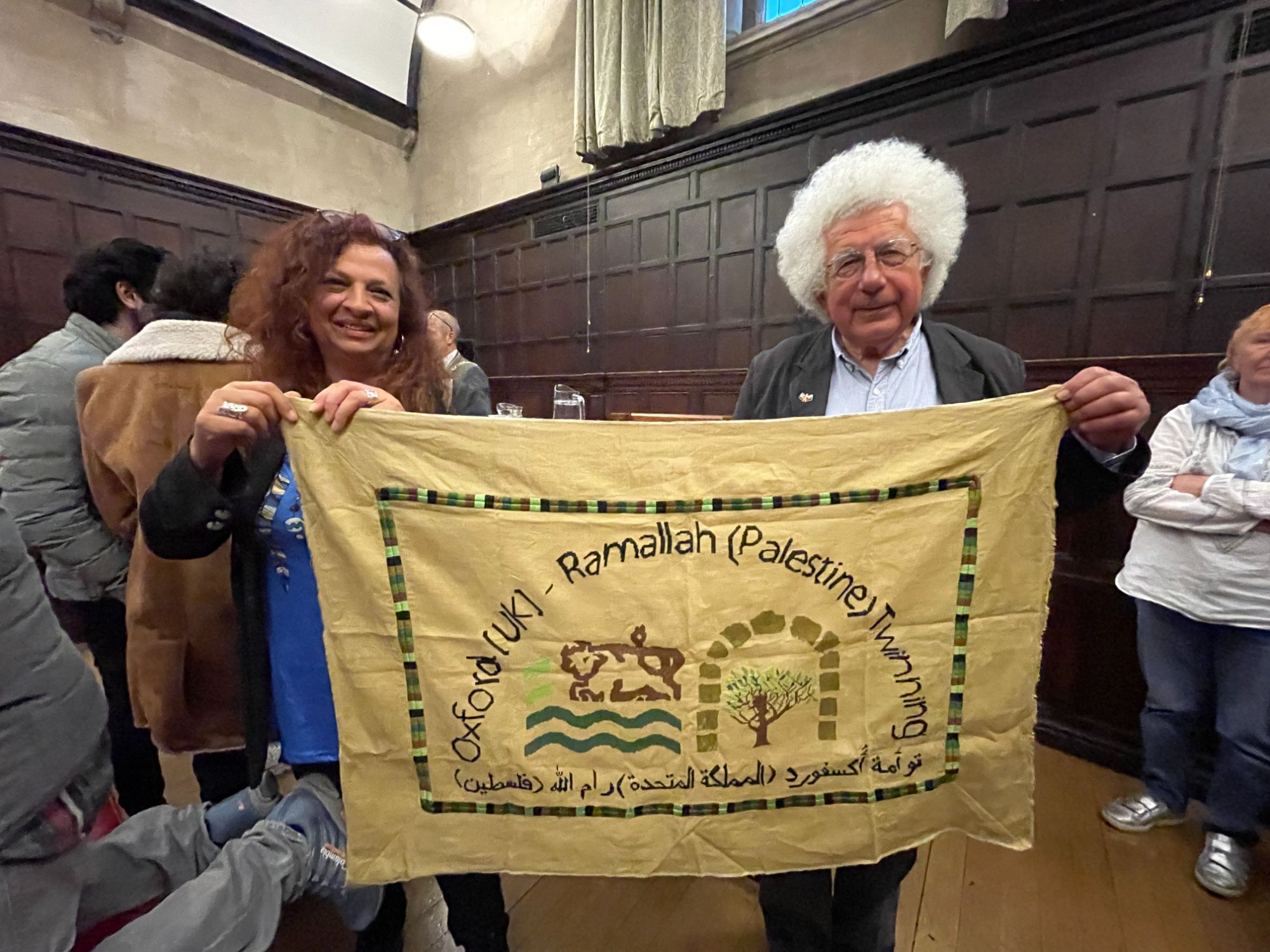
The Mayor of Ramallah, Janet Michael, will visit Oxford on 8th - 10th March 2007, at the invitation of ORFA (contact telephone 01865 247730). Provisional programme:

Thursday 8th March:

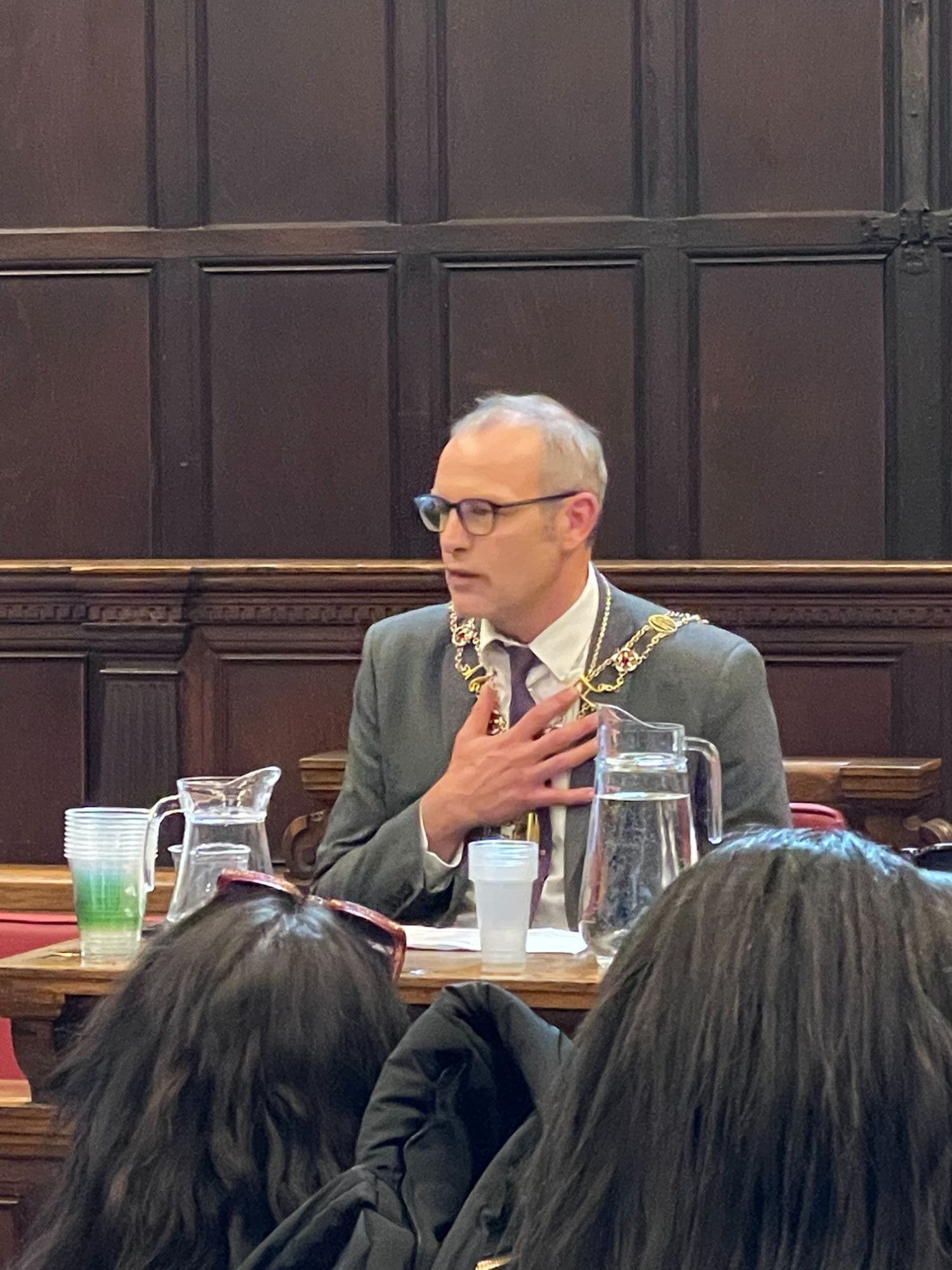
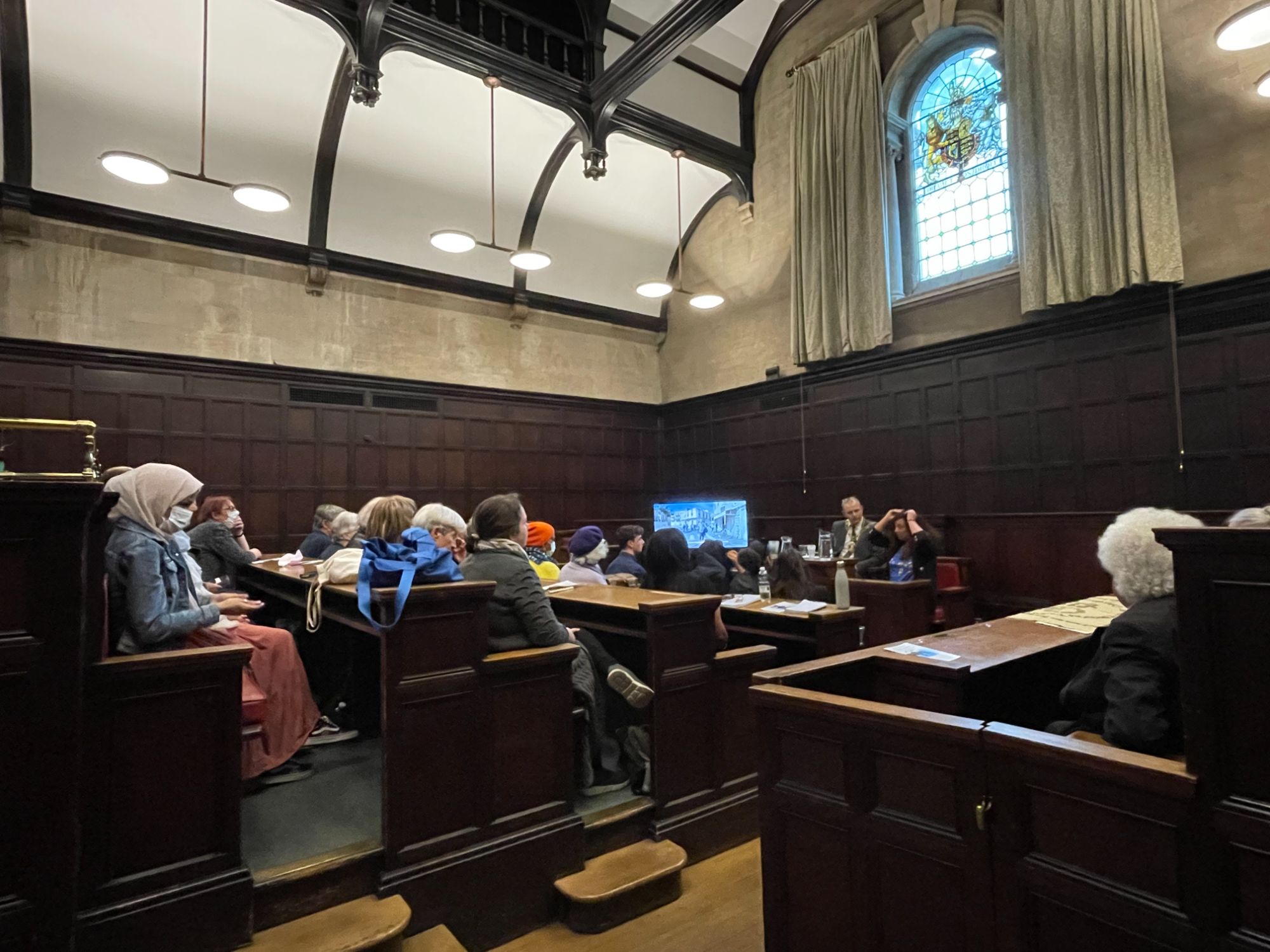
  • Midday: Reception at Oxford Town Hall hosted by Mary Clarkson, Deputy Mayor of Oxford (the Mayor being out of the country), with members of Oxford City Council. This will be followed by a press conference.

  • 5pm: Public meeting at St Anthony's College.

Friday 9th March:

  • Look around Oxford during the day.

  • 7.30pm: Public meeting at Oxford Town Hall. 'News from Ramallah, Palestine': Janet Michael will speak about issues in her city. This event is part of Oxford International Women's Festival .

Saturday 10th March:

  • Coffee with the Mayor of Oxford, Jim Campbell, in the Mayor's Parlour, Oxford Town Hall.

Janet Michael will be visiting Birmingham at the invitation of BRTI before coming to Oxford, and going on to London for a Britain Palestine Twinning Network event on 10th March.

Ramallah Story: The IDF and My Daughter's Hamburger

From: Sam Bahour
Sent: Friday, January 05, 2007
Subject: The IDF and my daughter's hamburger

Dear friends,

I wanted to write this last night but was exhausted from playing umpteen hands of the card game UNO with my 6 year old daughter, Nadine. Why this card frenzy, especially given I hate playing cards?

Well, we were in the center of Ramallah yesterday afternoon, at 3:40pm when the almighty Israeli military decided, again, that it was time to wreak havoc on our city. I should not really complain since what happened in Ramallah yesterday happens across the West Bank and Gaza regularly. Nevertheless, I will make an issue about it and urge every Palestinian, in every city, to make an issue about every Israeli infraction on our lives.

Yesterday I was extremely busy all day and had a dinner appointment with a serious venture capitalist in Jerusalem in the evening, so I agreed with my wife and girls that since I would not be home all day and night, that I'd pick them up at 3:30 sharp and we would go for a late lunch. We haven't been out much given all of the infighting lately so my girls were thrilled. I rushed home at 3:30 to pick them up and found my daughters dressed to kill. To them, this was a serious outing after a long holiday break which was spent mostly at home. The restaurant they had as first choice was closed due to the holidays, so they reverted to their favorite popular place, Angelo's Pizzeria, for those that know it.

Angelo's Pizzeria is on the main street in Ramallah, a few hundred meters from Lion's Circle, the smack middle of town where you saw on the the news Israeli bulldozers destroying cars last night. I parked on the Friends Girls School road which is behind the restaurant. As soon as I exited the car I felt something was wrong. As we walked into the restaurant I looked up and could see an Israeli gunship helicopter hoovering overhead firing at some unknown target. We thought it would be safer to enter the restaurant rather than return home.

The restaurant was full with most tables nervous at the sound of gunfire from overhead. The waiters, who have been through this dozens of times, visited the tables and played and joked with the kids. They knew that things were not right and went out of their way to make life normal, at least while we were their customers. The restaurant manager, a friend, came to our table and asked me for my car keys. He wanted to move my car because word came that the Israeli jeeps and armored vehicles that were operating in town were crushing cars parked on the side of the road. He found my car already in a safe spot and reassured us that this will pass soon. He knows, he has lived this reality every day for 40 years now!

We ordered a pizza and salad and Nadine insisted that Angelo's Pizzeria has the best hamburgers in town and wanted one as well so she ordered one herself. As we sat, things outside were clearly deteriorating. I got a call on my cellular hone from my dad back in Youngstown, Ohio. He asked where we are because no one answered at home. He briefed me on the live reports he was watching about what was happening outside the restaurant door. After talking with my father, I made frequent visits to the restaurant door to view people rushing away from the city center. While I was standing at the door, a friend of mine had finished eating with his wife and 4 kids and stood at the door contemplating to leave to cross the street to his car. I kept a lookout and gave him the all clear as he rushed his family across the street to his car and he was off. At this stage, I knew it was not only military activity overhead but something very close by.

The salad showed up in no time and we enjoyed it. Then the famous hamburger followed and then our pizza. All the time my wife was trying to make phone contact with her sister who we invited to join us but never showed up. She wanted to make sure she was ok given all the shooting and commotion outside. My older daughter, Areen, was a bit nervous, wondering how we were going to get back home. We reassured her that all would be fine. In reality, we had no idea.

Forty minutes later, my wife, Abeer, Areen and I had finished eating and were ready to go. Nadine, was happily, and very slowly, enjoying her world-class hamburger and fries while every so often reassuring us. " They come, shoot, arrest, and leave...so what's the problem? When they leave, we will go home, right dad?"

"So what's the problem?"! The problem is how can a 6 year old calmly sit through a mini-war happening outside the restaurant while enthusiastically devouring a hamburger without the slightest hint of being disturbed?

Nadine finally finished and we headed home. Luckily we were parked in the opposite direction of the shooting, so we drove the wrong way down a one way street and headed home. On the way, taxis were rushing about, driving worse than usual, shuttling people away from the center of Ramallah. When we got near our home we had to cross the Jerusalem- Ramallah road. Looking left about 200 meters away my girls yelled out that the IDF was blocking the street. I glanced and it was a mess. Jeeps all over, rocks filled the street, behind the jeeps I could see the open market was full of soldiers.

We finally got home. Turned on CNN, nothing! Switched to Jazeerah and they had live pictures of what was happening and the extent of it - another Israeli invasion into Ramallah. An undercover Israeli hit team tried to arrest someone and were exposed and came under Palestinian fire. They called in reenforcements and all the lone rangers came running (and shooting and plowing).

I was contemplating with my wife if I should risk heading to Jerusalem later in the evening. We agreed to wait and see how it develops given the news reports started to say the IDF was completing their operations and leaving the city center (only to move back to their permanent position of surrounding our city).

I went to check my email and cancel a radio interview appointment with CBC that I missed because of this mess. This is when Nadine came and asked if I could accompany her to the bathroom. She never asks to be accompanied. The bathroom in our small flat is literally 1 meter from my computer and 3 meters from the living room where Abeer was watching the news and Areen was letting Grandma Sarah in Youngstown know we were all home and ok.

I immediately understood and gladly accompanied Nadine and even made it a fun trip. Then I cancelled all my appointments that evening and spent the rest of the night doing exactly what Nadine asked for - to play UNO. We played alone, with Areen, as a family, and then alone again, multiple times. When bedtime came she kissed me good night and headed to her room along with her sister as usual - no escort. I felt that UNO therapy had worked. I may even claim for a new deck of UNO on my health insurance policy.

My friends, I write this not to bore you with one family's experience during 2 hours of occupation, but rather to scream to the world that we need your help!

4 Palestinian civilians were killed last night in this attack, 20 were injured, 5 of them seriously. I have no statistics on the number of children, like Nadine, whose skin become thicker during this latest Israeli adventure.

Israel has lost her way and the US is Palestinian-blind. Israel is creating yet another generation of Palestinians that are more numb to their military occupation than any other. Likewise, it is creating a generation of Israeli occupiers that see my city as the wild, wild, west. It is stripping children, Palestinian and Israeli, of their childhood. It must stop and NOW. We need your active support:

  • Organize locally, at your church, community center, union, etc.
  • Support Jimmy Carter's stance against Israeli Apartheid. Read his book.
  • Write letters.
  • Visit and engage your representatives. Demand public statements.
  • Sponsor a Palestinian student.
  • Invest in Palestine.
  • Request Angelo's Pizzeria start exporting hamburgers by express mail.
  • and most importantly, play UNO with your kids.

Braced for the 4 funerals that will start in 3 hours.

Sam

Ramallah Newsletter, November 2006

An Additional Barrier: Effect of the Israeli Wall on Palestinian Women, by Dr. Hadeel Rizq-Qazzaz

I remember the first time I came across information about the Wall in early 2002. A friend of mine working for an NGO visited the North of the West Bank, especially Qalqilia town. The reason of his visit was because many local beneficiaries of his NGO reported on this horrible Wall that is strangling them and cutting them of their livelihood, especially access to their land and water. When he came back he did some research and found out much more information about the Israeli plans. In a small informative workshop he tried to communicate the message of how dangerous and threatening the Wall was. Although touched and angered by the devastating information we got, none of us could really realize what it meant to have the Wall around. It was not until it came closer to home that people in Ramallah reacted to it. When the first cement blocks were planted near Qalandia check point, around Jerusalem and the Wall started circling around like a giant snake, people including me realized it was serious. It did not only destroy any possibility of a two state solution and laid out facts on the ground that are difficult to change, but also affected people's livelihood and day to day life.

I have to admit that the last few years of the second Intifada which started in 2000 forced many Palestinians including me to accept confinement to our small villages and towns. It may be the Wall, or the many permanent or temporary check points, or any other measure of the Israeli occupation. The result is that a country, a national struggle for liberation and life itself shrank to be centered around our towns and in many cases to our neighborhoods. I decided to over come this feeling of limited space and to go a little further to other villages and towns around Ramallah to see the Wall closely and talk to other women on how it affected their lives.

About the Wall

In June, 2002 The Israeli occupation started building a separation wall between Israel and the Palestinian Territories. When building is finished, the wall will be 670 Km long. As of 25 April 2006, 335 km of the Wall had been completed and were operational.145 km were still under construction. This Wall consists of an eight-meter concrete construction in some areas (around Qalqilia, Tulkarm, Bethlehem and East Jerusalem). In other places, it takes the form of a barrier, from 60 to 100 meters wide, which includes buffer zones with trenches and barbed wire, trace paths to register footprints, an electric fence with sensors to warn of any intrusion, a two-lane patrol road and fortified watchtowers at regular intervals.

The wall does not follow the Green Line (the 1949 armistice line generally accepted as the border between the two entities), but penetrates into the Palestinian Territories, leaving substantial parts of Palestinian territory and some Palestinian communities on the Israeli side.

Although Israel maintains that the Wall is a temporary structure, numerous institutions and experts have expressed concerns that it may have irreversible human rights and humanitarian consequences. Not only does the Wall separate Palestinian communities living on its western side from other communities of the West Bank, but it also prevents Palestinians on both sides from gaining access to their lands, places of work, schools and health facilities and consequently causes considerable hardships.

Being aware of all dangers that affected personal lives and socio-economic levels did not create any collective Palestinian movement against the wall. Apart from isolated events, especially in the villages surrounding Ramallah such as Belieen and Beit Sira very local actions against the Wall took place in the Palestinian side. As a woman in Beit Sira put it down sadly "more foreign solidarity groups and Israeli peace activists joined our protest than Palestinians from other villages and towns. We did not support other villages in their struggle, so they did not support us". The question in my mind was why? I carried this question around to the villages around Ramallah and talked to women there. My first impression was that much more was done than the media communicated to us. For these women the Wall was the center for their activism and daily struggle. It represents a continuation of the multi-level oppression they suffered from. They were in confrontation with the new reality every minute of their lives. Women joined the assembly after Friday prayers because they wanted to protect the remains and to stop the Wall from destroying what is left from their normal life. The peaceful demonstrations were the only hope not only to stop the wall but to "make it fall"

Om Mohammad, a proud woman from Betunia told me the story of her confrontation with an Israeli solider who tried to prevent her from collecting her goats which did not realize while following the temptation of green grass that they were crossing borders into a military zone. The woman shouted at the soldiers "the grass is in my land and the goats are used to these fields" and pushed him away. He could not prevent her but she knows that this is not going to be the case if she tried again. Maybe another soldier will shoot her like other people of the village including children who were cut off their playgrounds. Other women told me how they participated in the peaceful demonstration taking place in their villages, of their teenage children trying to protect their fathers from rubber bullets and tear gas, of their husbands being shot or arrested at night because they were participating in the demonstration. For them the struggle was a reality they lived emotionally while fearing about the well being of their families.

At the same time there is a growing sense of helplessness and "fighting alone" in a long uneven battle. In Betunia, women told me "There is no hope. Even if we protest and our sons are shot or arrested, the plans of the Wall will go on." One of the women said "Look what happens in Belieen, they have a weekly demonstration with many Israeli peace movement supporters and international solidarity members but the Israeli occupation does not care. They go ahead with their plans." Another one said "We protested and tried our best but it did not work. For eight months we had daily confrontations with the army. The wall continued to be built. We lost hope. We feel alone in a battle that is behind our abilities". The Israeli occupation managed through systematic and planned activities to fragment the struggle. Each village or town is left alone to face a strong and aggressive military power. The main result was the loss of a collective national struggle against the Wall.

Women were affected by the wall more than any other group in the society. They lost the main source of income for their families by losing the land and access to water. Their husbands lost access to cheap labor inside Israel, and their children lost their playgrounds and access to schools. In addition, women's freedom of movement was further restricted. Souad who was standing near the main road when I arrived to Beit Sira in the morning was still there when I left the village in the afternoon. I offered her lift to Ramallah which she and her five children appreciated very much. This gave me a chance to hear her story. Her parents live in Beit Hanina near Jerusalem and she could not visit them for the last six months. She told me that after the Wall was built the transportation to the village became less regular and more expensive. She did not leave the village all these months because she could not afford the cost but today she had to take her son to hospital. The only affordable hospital for her was an UNRWA-run hospital in Jerusalem. All villages beside the wall depend on the nearest urban center (in this case Ramallah) to get access to hospitals, markets, higher education and employment. Souad said if I did not pass by then she would not have gone because it will be too late. The community would not accept a woman going to town late. To protect her reputation and avoid rumors she would have returned home and tried again the next morning.

Om Alkheir from Betunia said: "My husband Abu Alkheir is very attached to our land. He still cares about it even after the wall was built. It is still the most beautiful and green piece. But he has many difficulties now. The soldiers told him he can not go their without a permit. When it is time to cultivate olives or figs he has to queue for days to get a permit from the Israelis. In many cases the permit is for few hours only. When we cross the gate to our land we have to hand in our identity cards. And come back on time or we will be punished by not getting any other permits." She insisted that we go upstairs to the roof of her house where we could see the green piece of land and the wall cutting the view but also the access to this land. Palestinians are required to obtain a permit to enter the closed areas. According to OHCHA-OPT (2006) in Qalqiliya governorate, a greater proportion of permits are being rejected - from approximately 25% at the beginning of 2005 to 38% in July 2005. Those most affected by this change in permit refusal are tenant farmers, laborers, spouses and second degree owners (relatives such as grandchildren). Approximately 50% of these people were refused permits for land ownership related reasons compared to 9% of landowners during the first half of 2005. This has adversely affected landowners who have traditionally relied on extended family members and hired laborers to assist with farming their land. Cultivating olives and figs was traditionally a women's role. Many women can not get permits to reach their land because the land is registered with men's names and they are not seen by the Israeli occupation as "owners". As one of the women told me, "we used to produce all our needs of olive oil. Now we have to buy it all, that's if we can afford it."

In different places the Wall has some gates which are supposed to allow Palestinians to get access to their agricultural land. However, gates are often some distance from farmland. Because the former road system was cut by the Barrier, some farmers have to travel over other farmers' land to reach their plots. In Jayyus village (Qalqiliya governorate), for example, there are only two gates to reach the land, where previously there were ten dirt roads. Agricultural gates are open three times a day, generally for 20 minutes to an hour. Following a security incident, the gates can be closed for several days or more. Tractors and other farm vehicles are frequently not permitted to cross the gate. Farmers must either walk or use a donkey to reach their land and bring out produce. Each permit is valid for a particular gate. Some farmers have the wrong gate numbers on their permits, leaving access for the farmer reliant on a soldier's discretion.

In Beit Sira the situation was worse. It is the last village before the green line. The wall which is surrounding the village from three sides turns it into a "refugee camp" as many women told me. They felt more bitter about the situation because not only they were cut of their agriculture land, but also from the water springs that were used for irrigation and drinking. Fatima, a mother of six children, told me in a desperate tone how their land was the only possibility for any income. Being close to the green line many men from the village used to work inside Israel. It was a ten minutes walk from the village to the main road connecting Jerusalem and Tel Aviv. Her husband used to work as unskilled labor. Now with the Wall surrounding the village, men can not cross to their jobs. At the same time the only other possible income of agriculture is not a choice any more. Just before the wall was built, Fatima and her husband planted different kinds of vegetables. After the Wall was built, irrigation of the plants was a daily risk. Israeli soldier prevented the family from using a tractor to transfer water to the field. At the same time they could not access the spring near their land. "The sweetest water on earth" Fatima told me. Nowadays when she wants to cultivate the vegetable, she has to go by foot. The children help but they can barely collect enough for their own use. If they carry a little more, she can sell them to earn little cash for other costs of living. For women, being searched or stopped at the gates creates a huge social problem. Many families prefer not to let women perform any agricultural tasks rather than facing the humiliating behavior of Israeli soldiers.

The wall is an additional barrier to Palestinian women who suffer from bad living condition, lack of access to proper health and education services and lack of access to the formal market. It adds to their suffering by further restricting their movement and restricting their participating in the economy through agriculture work. The danger of the Wall is that it is creating new facts in women's reality that will be difficult to challenge.